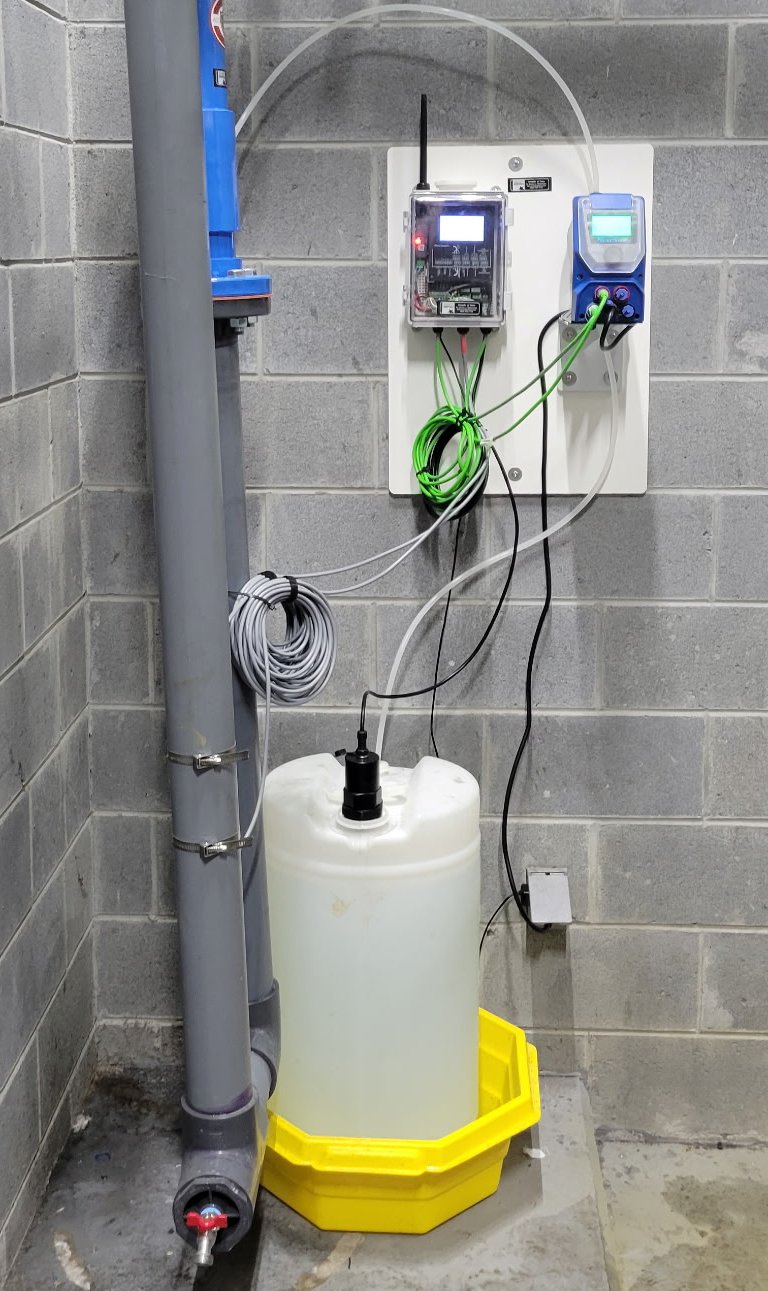
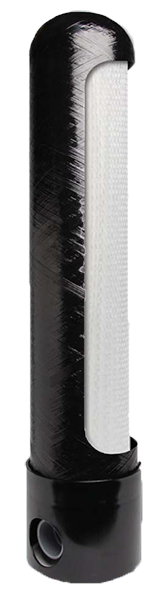
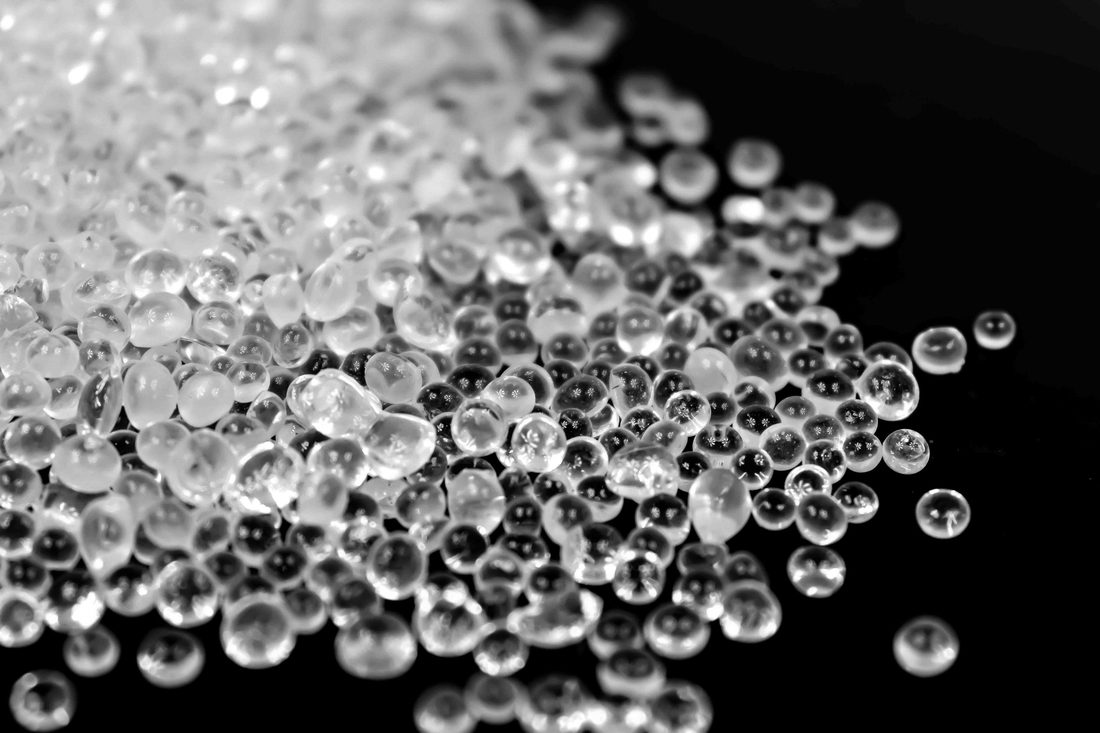
Good news: you don’t have to live with gypsum scale. Crusader’s Active Armour phosphate treatment is built to keep calcium sulfate dissolved and off your pipes, water heaters and equipment — no salt, no wasted water. We test your water first, then dose precisely to your conditions so scale never gets a foothold — and where scale has already formed, continuous dosing works to gradually break down and remediate those existing deposits over time. Here’s what you’re up against — and how we stop it.
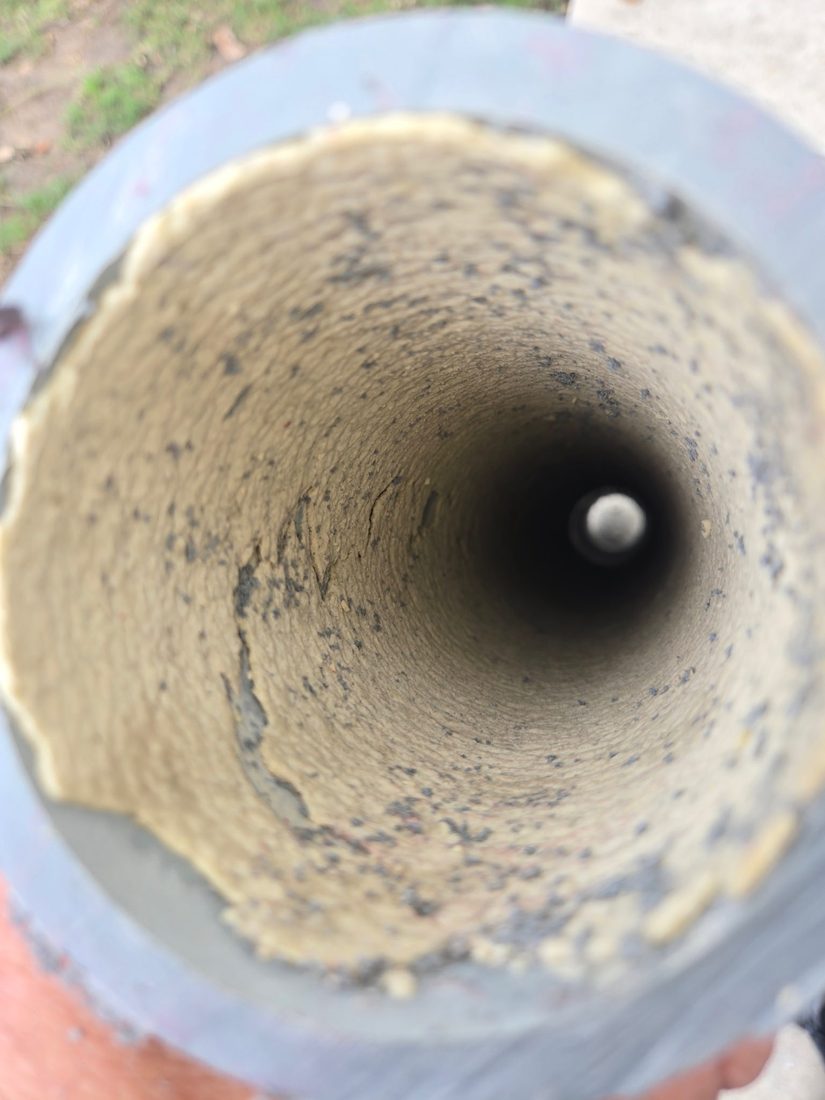
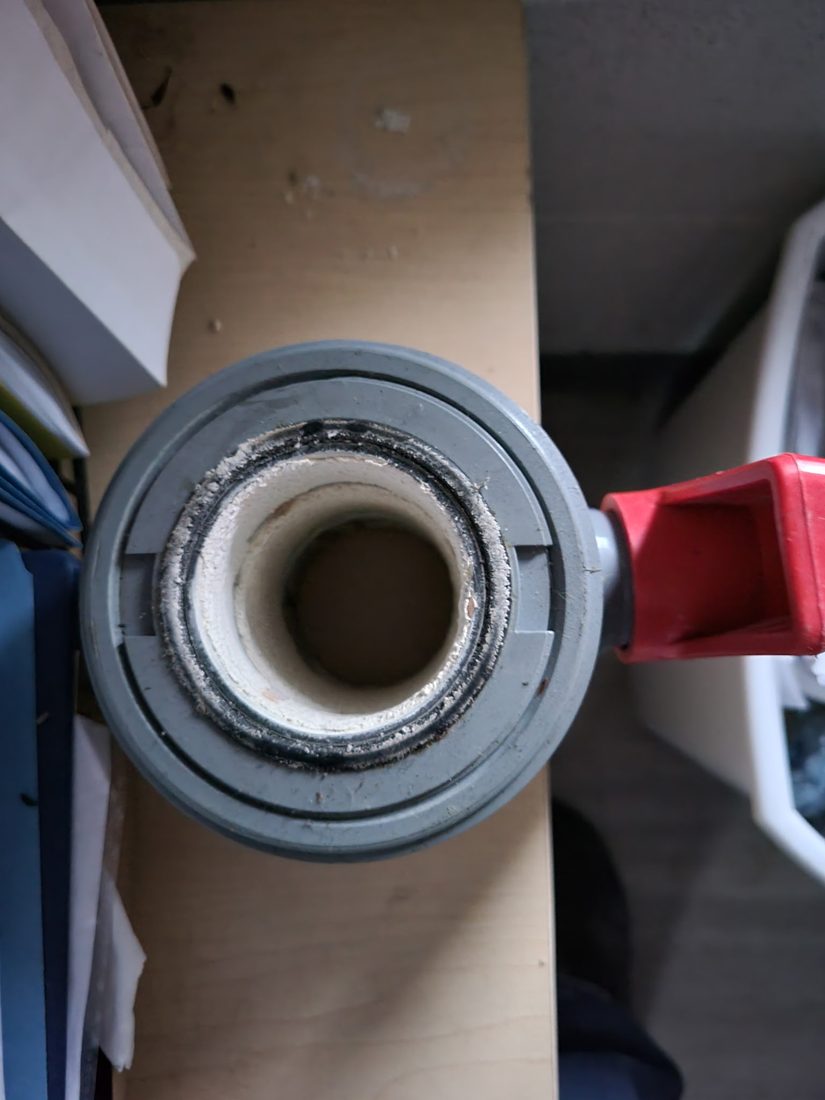
When people talk about “hard water scale,” they usually mean calcium carbonate (the chalky white crust on a faucet). Calcium sulfate — the mineral better known as gypsum — is a different and more difficult beast. Its crystals are smaller and cement together more tightly, so the deposit is brittle, dense, and stubborn: it doesn’t fizz or dissolve in acid the way carbonate scale does, which makes it much harder to clean off once it forms. And unlike what many people expect, it bonds to plastic pipe — PVC, CPVC and PEX — just as readily as it does to metal, so switching pipe material doesn’t make the problem go away. Gypsum is also less forgiving chemically: it forms even at lower pH and shrugs off the simple pH adjustments and ordinary carbonate-scale inhibitors that keep everyday hard-water scale in check.
What Calcium Sulfate Scale Looks Like
Why calcium sulfate scale is worse
Scale is dangerous on any heated surface because it acts as an insulator — the equipment has to burn more energy to push heat through it, and trapped heat creates hot spots that can warp or rupture metal. The numbers tell the story. Compared with clean steel at roughly 15 (kcal/m²·h per °C), the common deposits conduct far less heat:
| Material | Relative thermal conductivity |
|---|---|
| Steel (clean metal) | ~15 |
| Calcium sulfate (CaSO₄) scale | ~1–2 |
| Calcium carbonate (CaCO₃) scale | ~0.5–1 |
| Silica (SiO₂) scale | ~0.2–0.5 |
Even a thin sulfate layer sharply reduces heat transfer, driving up energy use and the risk of overheating.
Where it shows up
Calcium sulfate scale becomes more likely wherever water is heated or concentrated: boilers and recirculation loops, tankless and tank water heaters, cooling systems, reverse-osmosis membranes, ice machines and food-service equipment. Because solubility shifts with temperature and concentration, commercial and multi-unit properties — apartments, restaurants, laundries — feel it first, but homes with high-sulfate well water can see it too. The only way to know what you’re dealing with is to test the water.
How we stop it
You don’t have to rip out plumbing or live with the scale — but the fix has to match the problem. Gypsum is a scale-control problem, and the tool built for it is phosphate threshold inhibition. It always starts with a water test.
- Liquid Active Armour (LAA) — this is the fix for calcium sulfate. Food-grade phosphate chemistry controls gypsum without removing the minerals. Crusader’s Active Armour and Liquid Active Armour (LAA) formulations are engineered to do exactly this, working four ways: threshold inhibition (phosphate latches onto forming crystals and distorts them before they can stick), sequestration (binding calcium into soluble complexes so less is free to crystallize), dispersion (keeping particles suspended instead of clumping onto surfaces), and gradual removal of existing light deposits over time. Continuous, metered dosing keeps that protection steady — in homes, and on commercial lines all the way up to a 48″ main.
What does not fix calcium sulfate
- A water softener is not the answer. Ion exchange swaps calcium for sodium — it does not remove sulfate. It also demands salt and brine discharge, and at the hardness and sulfate levels (and the flow rates) where gypsum actually shows up, a softening train is impractical and still leaves the sulfate behind. Softeners are for soft water — not for sulfate scale.
- Reverse osmosis is not a scale solution. RO polishes drinking water at a single tap; it does nothing to protect your plumbing, water heater, boiler or equipment. In fact an RO membrane is one of the first things calcium sulfate will scale up — RO needs to be protected from gypsum, not relied on to stop it.
A good program starts with a water analysis — measuring calcium, sulfate, pH, TDS and temperature to gauge how close your water is to depositing gypsum (its gypsum saturation index), including at water-heater temperatures, where the risk climbs. For the science and safety behind phosphate treatment, see phosphate technology & safety — and for facilities, commercial Liquid Active Armour is the core of the plan.